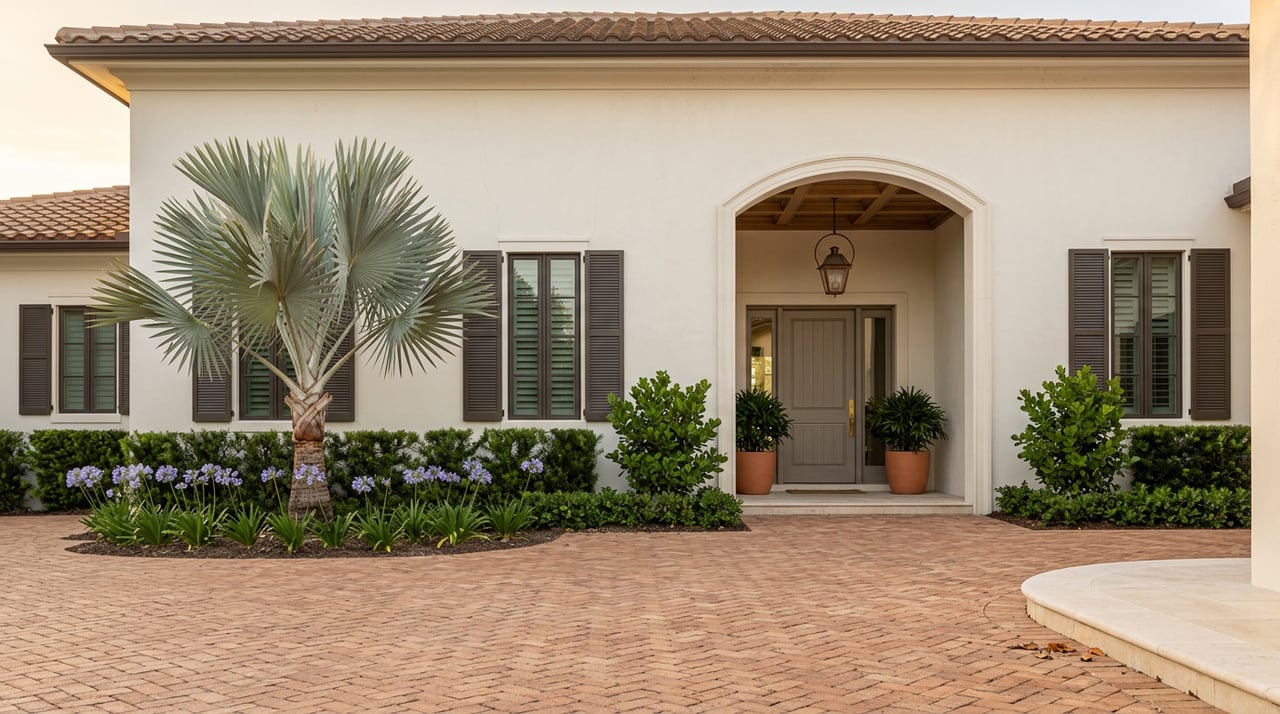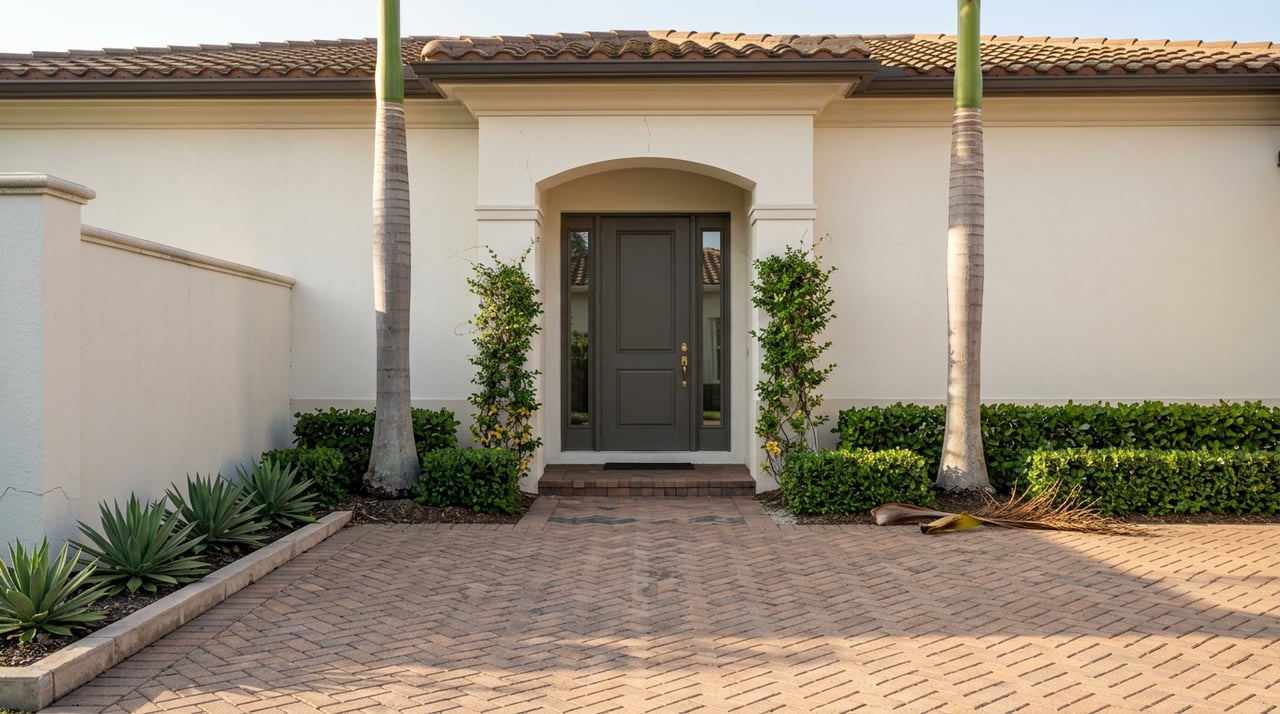
If you've owned on the water in Aqualane Shores since before Hurricane Irma, there's a decent chance the property took on some water at some point and you never called an insurer about it. A king tide pushed an inch across the lanai. Storm surge from Ian topped the seawall cap and receded before it reached the living room floor. You mopped it up, patched what needed patching, and moved on with your season. For years, that judgment call carried no weight in a sale. Since October 1, 2025, it does.
Florida's flood disclosure statute, section 689.302, first took effect on October 1, 2024, and required sellers to disclose flood insurance claims filed on the property and any federal flood assistance received. A year later, the legislature widened it. Sellers must now disclose any flood damage that occurred during their ownership, whether or not they ever filed a claim. The Florida Realtors trade association confirmed the expansion took effect this past October, and it applies to every residential sale in the state, condos and new construction included. That single change quietly closes the loophole a lot of long-tenured waterfront owners have relied on without realizing it was a loophole at all.
The Disclosure Line Moved, Not Just the Insurance Math
Florida sellers have carried a general duty to disclose known, hidden material defects since the state Supreme Court's 1985 ruling in Johnson v. Davis. That duty was always broad enough to arguably cover an unreported flood event, but it left room for interpretation, and interpretation is exactly what a defense attorney needs. The FD-1 form removes the ambiguity. It asks a direct yes-or-no question about flood damage during your ownership, full stop, no carve-out for damage you decided wasn't bad enough to report.
For an Aqualane Shores seller, that means an honest accounting of any high water at the property since you've owned it, not just the years you filed paperwork. A buyer who later discovers unreported flood damage has grounds to seek damages or, in some cases, rescind the contract. The defense costs on that kind of claim routinely outrun whatever the disclosure would have cost you in negotiation. Writing it down protects you more than staying quiet ever did.
The Map That Hasn't Moved Yet
Here's the part that catches sellers off guard in the opposite direction. Collier County's flood insurance rate map has not actually changed. As of this summer, the map still in effect is the one adopted on February 8, 2024, the county's first comprehensive update since 2012. County officials have described the next revision, a Physical Map Revision built on updated LiDAR elevation data, as targeted for adoption sometime between August and October 2026, following the standard public review and appeal process that accompanies any FEMA remapping. WINK News covered the county's rollout of the preliminary maps and confirmed the same fall 2026 target.
So the map most people are bracing for hasn't landed yet, and it may not land for another few months. That gap is where the real risk sits, and it isn't the risk most owners are picturing. A zone reclassification alone doesn't determine what your home is worth or what your premium will run. What it does is sharpen the attention that appraisers, lenders, and insurers pay to a property's flood documentation the moment the new map is public. The city's own floodplain data already places much of Aqualane Shores in Zone AE, with some waterfront parcels reaching into Zone VE, the coastal high-hazard classification tied to wave action rather than standing water alone. A neighborhood already carrying that designation doesn't get a grace period once the new map takes effect. It gets more scrutiny, faster.
What Actually Costs You Money at the Closing Table
The reclassification itself rarely tanks a deal. The absence of documentation does. Florida's standard AS-IS contract gives a buyer a defined inspection window, typically two weeks, to walk away for any reason or to renegotiate based on what an inspection turns up. A seawall with no recent inspection report, an elevation certificate that's a decade old, or a dock repair with no permit on file are exactly the kind of findings that surface in that window, and they surface at the worst possible moment, after a buyer has already fallen for the house.
Seawall work in this market isn't cheap to begin with. Standard concrete or vinyl sheet-pile replacement runs $300 to $800 per linear foot, and in the higher-demand corners of Southwest Florida, where contractor schedules are tight, that figure can climb to $1,200 per linear foot. A typical 60-foot seawall replacement lands somewhere between $18,000 and $72,000 before engineering and permitting fees, which usually add another $2,000 to $5,000. Those numbers matter less as a threat and more as a negotiating tool. A seller who walks in with a current seawall inspection report can price around a known condition. A seller who doesn't is negotiating blind against a number the buyer's inspector just handed them.
The City of Naples adds its own layer of process on top of the county's. Any seawall or dock work requires engineered plans stamped by a professional engineer or registered architect, contractors working over navigable water must carry longshore insurance, and a final survey is required before the city will issue a certificate of completion. Aqualane Shores also sits inside the West Naples Bay Special Taxing District, which the city created specifically to handle canal dredging, seawall inspection, and cleanup along this stretch of waterway. That district exists because the canals here need regular attention, and a buyer's agent who knows the neighborhood will ask whether the parcel's maintenance history lines up with it.
The zone on the map doesn't sink a sale. The gap in the file does.
A Fall Timeline, Not a Spring One
Naples runs on a seasonal clock. Buyer activity climbs from November through April, when the bulk of second-home and seasonal buyers are actually in town to see a property in person rather than touring it by video call. Luxury sellers here are routinely advised to be market-ready before that winter traffic arrives, not scrambling to catch up once it does. An elevation certificate from a licensed surveyor and a written seawall inspection from a marine contractor both take real calendar time to schedule and complete. Ordering them in November, once showings are already stacking up, means either delaying a launch or listing with gaps in the file that a buyer's inspector will find for you.
Waiting for the new flood map to become official before you act is the wrong instinct. By the time it's final, likely sometime this fall, you'll be doing this paperwork during the exact weeks the market gets busiest. Getting ahead of it now, while the map is still preliminary and the season hasn't turned, is the only version of this that doesn't cost you time you don't have later.
Before You List: A Short Checklist
- Order or update your elevation certificate through a licensed surveyor if the one on file predates recent renovations or is more than a few years old.
- Schedule a written seawall and dock inspection from a marine contractor, documenting age, condition, and any prior tie-back replacement or repair.
- Write down your own flood history honestly, including any water event during your ownership regardless of whether you filed a claim.
- Request real flood insurance quotes now, not estimates, so buyers see an actual number rather than a guess.
- Check your parcel against Collier County's preliminary flood map so there are no surprises when the county publishes the final version.
A Few Questions Worth Asking Directly
Does the 2026 map change automatically lower my home's value? No. A zone change affects insurance requirements and building standards, but it doesn't set your price on its own. Documentation is what determines whether a buyer treats the change as a known, priced-in factor or an unresolved question.
If I never filed a flood insurance claim, do I still have to disclose water intrusion? Yes. As of October 1, 2025, Florida law requires disclosure of any flood damage during your ownership, independent of whether you ever filed a claim or received assistance.
How long does a seawall inspection or elevation certificate actually take? Scheduling alone can run several weeks during busy season, longer if repairs are found and permitting is required. This is the main reason to start the process in late summer rather than waiting until listings.
Should I hold off listing until the new flood map is finalized? There's little reason to. The documentation that protects you in a sale doesn't depend on which map is in effect. It depends on whether you have it ready before a buyer asks.
Getting this right takes the same kind of precision that goes into presenting a home for its first showing. It rewards the seller who did the quiet work before anyone else was looking. If you're weighing a sale in Aqualane Shores this season and want a clear-eyed read on what your file needs before the market turns, Chef David Sells Naples is glad to walk through it with you. Schedule a private consultation and we'll go through the paperwork together, line by line, before the season does the deciding for you.